The Saronic Islands
Charming island villages just minutes from Athens.
Athens' Perfect Sailing Escape
The Saronic Islands are situated in the Saronic Gulf, just south of Athens. This proximity to the capital makes them ideal for short charters and weekend getaways, as well as full week explorations.
The region includes some of Greece's most charming and sophisticated island destinations: car-free Hydra with its stone mansions, pine-scented Poros, vibrant Aegina known for its pistachios, and aristocratic Spetses.
The itinerary can be extended south to the beautiful anchorages of the Peloponnese coast - Monemvasia, Nafplio and Leonidion - for chartering the most spectacular coastline in southern Greece.
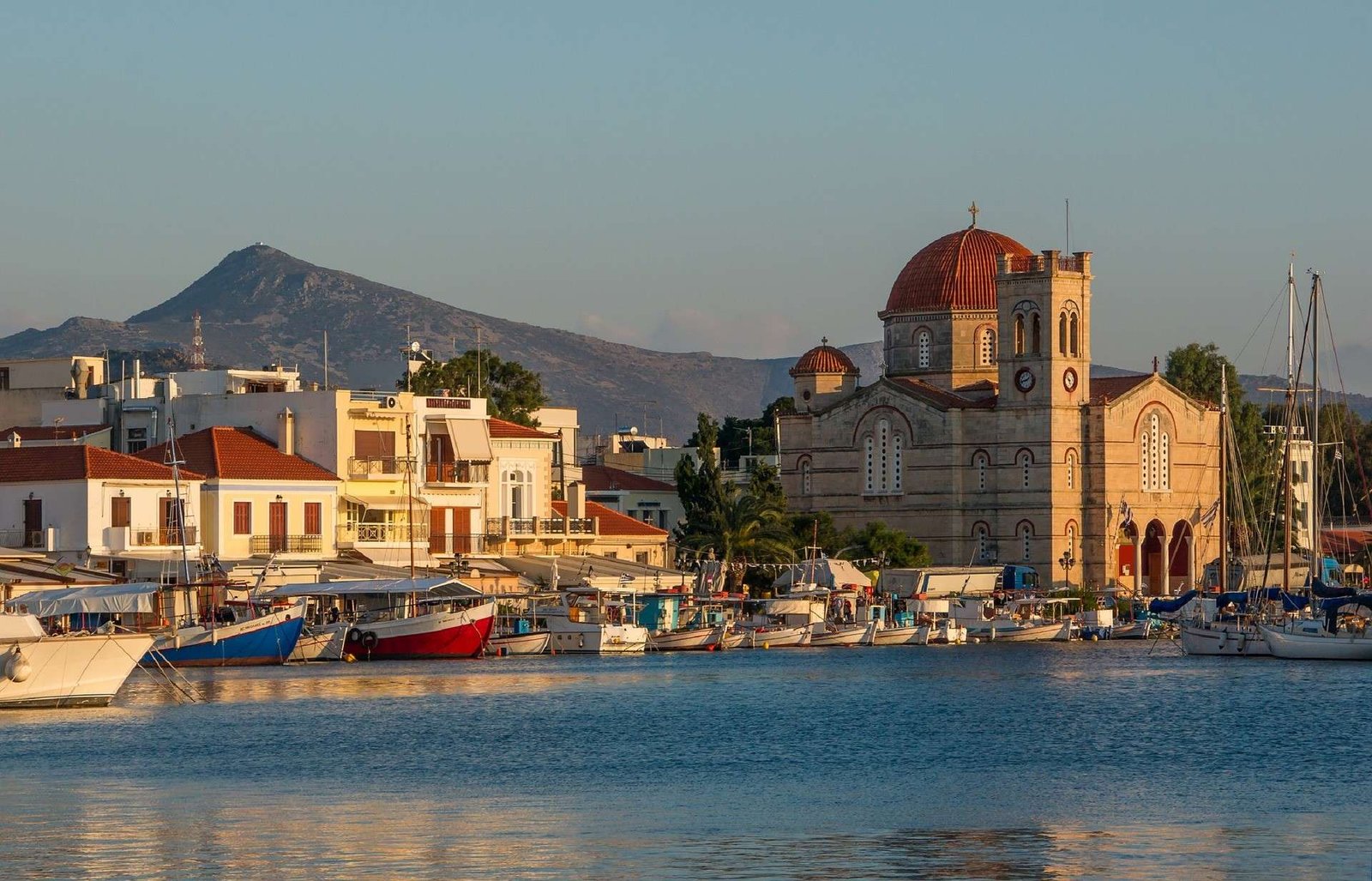
Saronic Islands & Peloponnese
Hydra
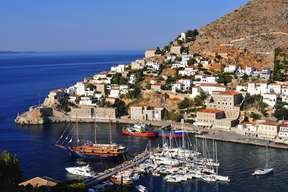
Hydra (50 km², ~2,000 inhabitants) is the Pearl of the Saronic Gulf. It is one of the most distinctive islands in Greece - cars and motorbikes are banned; the only transport is on foot, by donkey, or by water-taxi. This makes it feel uniquely unhurried and glamorous. The town of Hydra wraps around a horseshoe harbour lined with neoclassical stone mansions with terracotta roofs.
Cannons at the port entrance stand as reminders of the island's proud naval history. The Tombazi mansion houses a summer annexe of the Athens School of Fine Arts. The Monastery of Kimissis Theotokou overlooks the quay. The fishing hamlet of Kaminia (15 minutes west) and the old shipyard of Mandraki (30 minutes east) are wonderful walks. Beaches: Molos, Agios Nikolaos, Palamida, Kaminia.
Poros
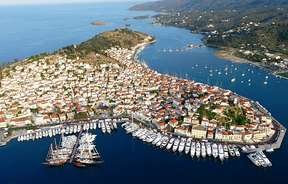
Poros (33 km², ~3,500 inhabitants) lies just 250-400m from the Peloponnese coast, separated by one of the narrowest channels in Greece. It is actually two islands: Sphaeria (where the town and port are located, of volcanic origin) and Calauria (the larger wooded island, connected by a bridge). The town rises attractively up the hillside with white picturesque houses.
Marinas at Mikro and Megalo Neorio offer excellent mooring facilities. The ruins of the 6th century BC Temple of Poseidon and the Zoodochos Pigis monastery are unmissable sites. Beaches on the south coast of Kalavria are ideal for swimming; Galatas beach on the mainland is reachable by a short boat ride. Poros makes a superb first or last night anchorage from Athens.
Aegina
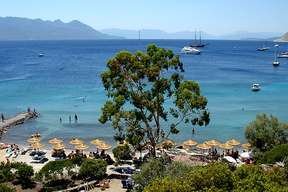
Aegina has a triangular shape and lies just 20 km southwest of Athens. The Temple of Aphaia (6th century BC, near Agia Marina) forms the sacred Greek triangle with the Parthenon and Cape Sounion. Historically remarkable: Aegina was the first capital of newly independent Greece (1828-1829), the first place where Greek coins were minted, and the birthplace of the first Greek navy.
The island is the main producer of Greek pistachios - sold throughout the country. The Monastery of Agios Nektarios (one of the largest in the Balkans) is a major pilgrimage site. Paléochora is a partially abandoned Byzantine hilltop town with dozens of chapels. Beaches: Marathonas, Souvala, Agios Vassilios, Kolona, and Agia Marina (the most popular, with organised facilities).
Spetses
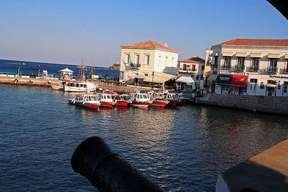
Spetses (27.1 km², ~4,000 inhabitants) lies just 2 nautical miles from the Peloponnese mainland and 52 nm from Piraeus. The capital Spetses town with its Dapia harbour is charming - pavements are paved with distinctive black and white pebble mosaics. The house of Admiral Bouboulina, hero of the Greek War of Independence, is now a private museum open to visitors.
The Monastery of Agios Nikolaos is a landmark of national importance - it was from here in 1821 that the oath of independence was sworn, and the first Greek flag raised. Beaches: Agia Paraskevi, Agioi Anargyroi, Agia Marina, Zogeria (considered the most beautiful on the island - perfect setting, crystal clear waters), Vrellos (sandy and pebble, pine trees), Kaiki Beach (fine sand, water sports).
Nafplio
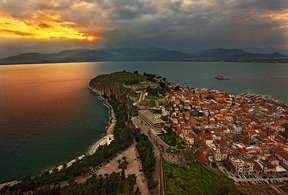
Nafplio (14,203 inhabitants) is the most romantic city on the Peloponnese and served as the first (and later second) capital of the modern Greek state from 1828 to 1834. It is celebrated for its neoclassical buildings, pedestrianised old town streets and impressive fortifications. Two great fortresses dominate the skyline: Acronauplia (Venetian, three levels) and the magnificent Palamidi (built 1711-1714, 999 steps, panoramic views over the gulf).
The Bourtzi fortress (hexagonal, Venetian) sits on a small island at the harbour entrance and is now used for exhibitions and music festivals. Syntagma Square is the heart of the old town. Museums: Archaeological, Army, Ethnographic, and the unique Kombolo (worry-bead) museum. Nafplio is an essential stop on any Saronic sailing itinerary.
Monemvasia

Monemvasia (also known as Malvoisie) is a fortified city in Laconia, south of the Peloponnese - a rocky peninsula similar to Gibraltar, about 300m wide and 1 km long, rising 100m above sea level and connected to the mainland by a short causeway. The town was built in the 6th century by inhabitants fleeing Slav invaders, as the rock was invisible from the mainland, protecting it from attack.
The rocky peninsula was separated from the mainland by an earthquake in 375 AD. Over the centuries it changed hands between Venetians and Turks until its liberation in the Greek War of Independence. The castle city is one of the most impressive sights in Greece - entirely made up of fortifications, old stone houses, cobbled streets, churches and a 16th-century mosque housing an archaeological collection. The modern town of Gefyra on the mainland has the port and tourist facilities.
Leonidion
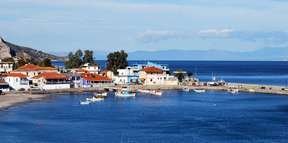
Leonidion is a village in Arcadia, 200 km south of Athens on the eastern coast of the Peloponnese with 6,000 inhabitants. It is overlooked by dramatic limestone cliffs 250m high, which attract climbers from across Europe - at least 15 routes thread through vertical rock adorned with stalagmites and caves. The inhabitants are of ancient Tsaconian origin, with their own distinctive dialect.
Plaka is the small picturesque harbour with fishing boats, yachts and a beautiful crescent-shaped sandy beach. The Monastery of Panagias Elonis is dramatically perched on a clifftop - a quiet and relaxing place with beautiful panoramic views. The Monastery of St. Nicholas Sintza is equally impressive. The surrounding Arcadian mountains offer impressive gorges, rivers, ancient ruins and Byzantine churches.
Dokos
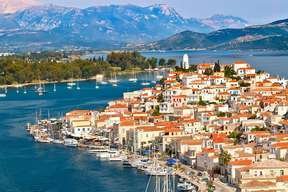
Dokos is a small, quiet island in the Saronic Gulf, positioned between Hydra and the Peloponnese coast. With an area of 12.5 km² and about 50 permanent inhabitants (mainly monks, sheep breeders, fishermen and farmers), it offers an authentic escape from tourist crowds. The island is rocky and mountainous, rising to 308m. The lighthouse was rebuilt in 1923.
Numerous archaeological excavations have revealed Dokos was an important port in antiquity, strategically placed in the Byzantine era to monitor shipping entering the Saronic Gulf. The east side has impressive ruins of a large Byzantine citadel with sweeping views. The convent of Santa Eupraxia is open to Orthodox pilgrims. The beaches are small, clean, and uncrowded with clear water - perfect for those seeking solitude.
Porto Heli
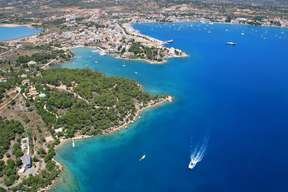
Porto Heli (also spelled Porto Cheli) is a Greek seaside resort on the Argolic Gulf in the Peloponnese, with just over 2,100 permanent residents. Located 85 km southwest of Nafplio and approximately 230 km from Athens airport, it is well-positioned for reaching both the Argo-Saronic islands and the coastal sites of the Peloponnese.
Porto Heli has a marina and full tourist facilities, making it a natural hub for visiting nearby Spetses, Hydra, and Poros. The harbour is a frequent mooring for boats of all kinds. Near the modern town lies the site of the ancient city of Halieis - its foundations date from 700 BC and its ancient acropolis ruins are still visible, while much of the ancient city is now submerged beneath the clear waters of the bay.
Epidaurus
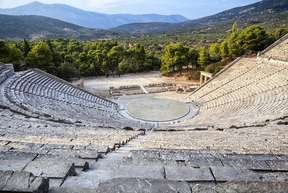
Epidaurus, in the regional district of Argolida, is an area steeped in ancient history. The ancient city was home to the Temple of Asclepios, founded long before Christ - the sanctuary was where the sick came to be healed by the god of medicine through sleep and dreams interpreted by priests. In 1822, the village of Nea Epidavros hosted the National Assembly of Epidaurus - the first meeting of what became the Greek Parliament.
Epidaurus is most famous for its ancient theatre (4th century BC) - one of the best preserved and most beautiful in all of ancient Greece, with 55 rows of seating for 14,000 spectators and acoustics so perfect that a whisper on stage can be heard in the last row. The site also features the sanctuary of Asclepios, a stadium, and a museum of sculptures and artefacts. World-class productions are still staged here every summer.
Alimos
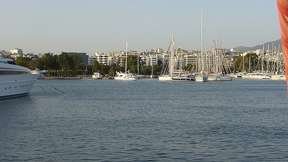
Alimos (also known as Kalamaki) is a coastal suburb located south of Athens in the periphery of Attica. It is a popular holiday resort for the urban population of Athens, well known for its beaches and lively nightlife. The area has excellent transport links to the city centre and the port of Piraeus.
Alimos Marina is one of the biggest and most modern marinas in Greece, with capacity for 1,000 vessels on a permanent basis. Located 15 km from Athens city centre, 8 km south of Piraeus and 30 km from Athens International Airport, it is the natural departure point for yacht charters in the Saronic Gulf - the ideal starting point for exploring the Argo-Saronic islands.
Fokianos
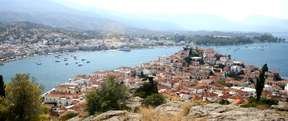
Fokianos is a small fishing village in Arcadia, on the eastern Peloponnese coast, located 33 km south of Leonidio (20.5 nautical miles by sea). It is a quiet, green and mountainous village typical of the Peloponnese interior, best known for its beautiful protected bay.
The bay has calm turquoise waters and a beach of white stones - a favourite stopping point for yachts cruising between ports. Two small taverns near the beach serve fresh local dishes and offer various provisions for travelling sailors. Fokianos is ideal for a midday anchorage between Leonidion and Spetses, with a tranquil authenticity far removed from the busier Saronic islands.
Kyparissi
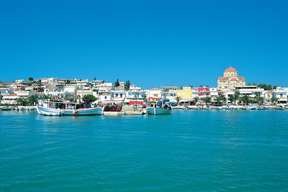
Kyparissi is a village in Zarakas, Laconia, in the Peloponnese, 300 km south-west of Athens. It is considered by many to be one of the most beautiful and picturesque villages in Greece - and yet remains one of the least visited destinations in the country, preserving its authentic character and unspoilt natural setting.
For climbers, Kyparissi offers at least 15 different routes through vertical limestone rock faces adorned with stalagmites and caves. For sailors, the setting - the view from the water with rock walls meeting the sea, the quiet harbour - is quite unique. The beaches impress visitors with their beauty and purity: Megali Ammos in Paralia and Mikri Ammos are the main ones, both uncrowded and clear.
Yerakas
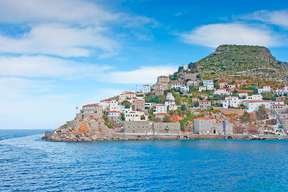
Yerakas (or Gerakas) is a primitive village on the eastern coast of Laconia, 22 km from Monemvasia, nestled between the mountains at the head of a bay that forms Greece's only true fjord. The large, safe bay is invisible from the open sea - a quality that has always aroused the interest of sailors, pirates and conquerors alike. It served as the Byzantine naval station against the Saracens and a refuge for Hydra and Spetses merchants.
Today the village consists of three hamlets: the port, Gerakas, and Agios Ioannis. The whitewashed houses with blue windows perched on the hillside resemble an Aegean island village more than a Laconian village. The protected harbour is excellent for yachts, sheltered from the winds. Fish taverns at the waterfront offer fresh catches each morning. An extraordinary, off-the-beaten-track destination.
Sail the Saronic Gulf
Ideal for a first charter or a quick Athens getaway. Our team will handle everything.